
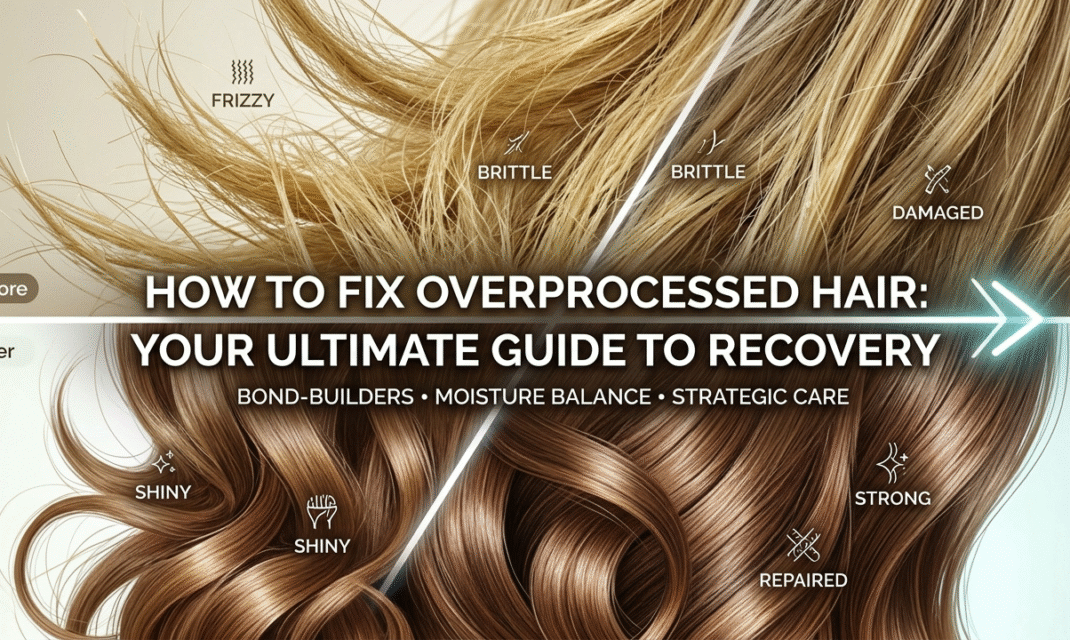
There is a distinct moment of panic when you rinse out a chemical treatment, dry your hair, and realize something is terribly wrong. Instead of the silky, vibrant locks you envisioned, your hair feels like wet cotton candy when damp and straw when dry. It snaps with the slightest tug, lacks shine, and refuses to hold a style.
If you are staring into the mirror wondering how to fix overprocessed hair, take a deep breath. You are not alone, and your hair is not a lost cause.
When hair undergoes excessive chemical altering—whether from bleaching, permanent hair color, structural relaxers, perms, or daily high-heat styling—its internal architecture collapses. However, with a targeted, scientifically backed rehabilitation routine, you can restore its strength, elasticity, and shine.
This comprehensive guide will break down the science of chemical damage, outline an immediate salvage strategy, and provide a step-by-step overprocessed hair treatment plan to nurse your strands back to life.
What is Overprocessed Hair and Why Does It Happen?
To understand how to reverse the damage, it helps to understand what happens to your hair strands during a chemical service.
Each hair strand consists of three main layers:
- The Cuticle: The outermost layer of overlapping, microscopic scales that protect the inner shaft. Healthy cuticles lie flat, trapping moisture and reflecting light.
- The Cortex: The thick middle layer containing melanin (color pigment) and keratin bundles held together by disulfide, hydrogen, and salt bonds. This layer dictates your hair’s strength and elasticity.
- The Medulla: The innermost core, present primarily in thicker hair types.
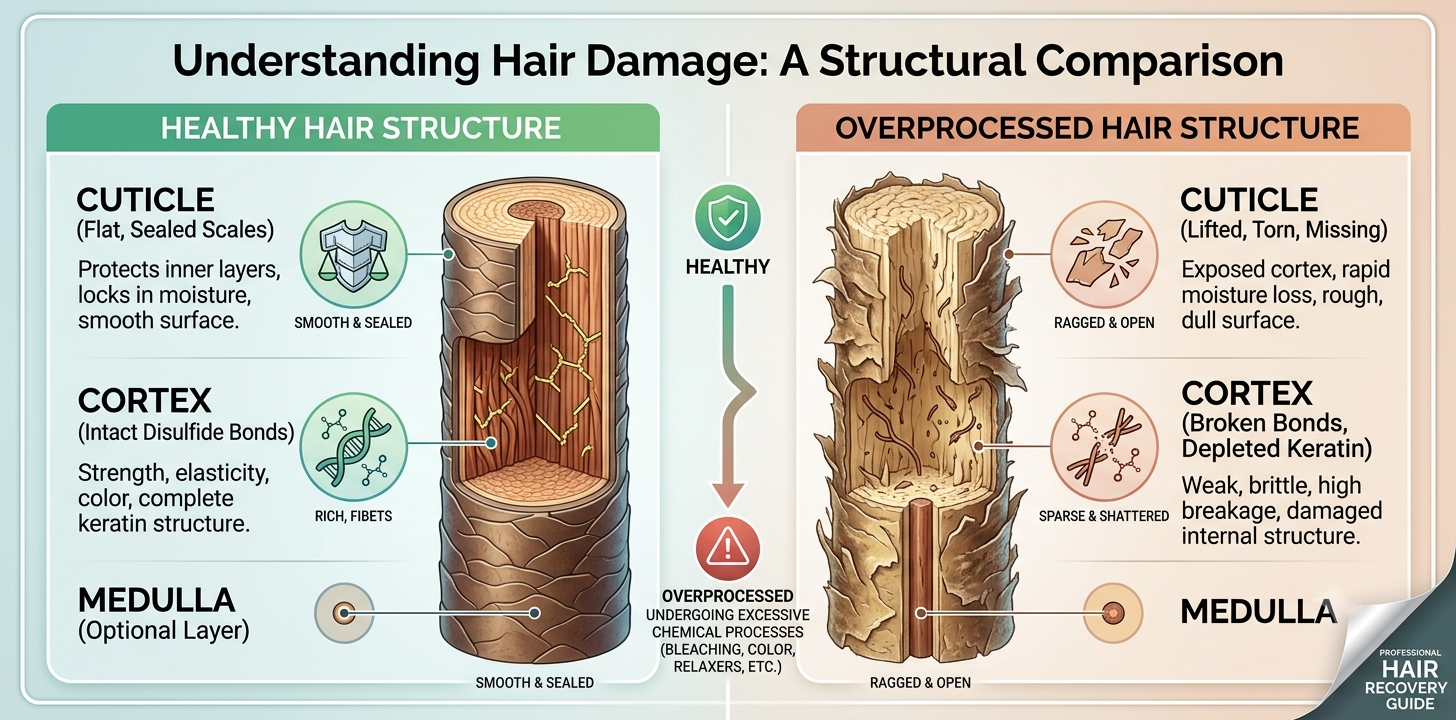
When you apply aggressive chemical treatments, alkaline agents force the cuticle scales to open wide so processing chemicals can alter the cortex. In an over bleached hair repair scenario, for example, the bleach dissolves your natural melanin while simultaneously degrading the structural keratin proteins.
If these chemicals are left on too long, mixed at a dangerously high volume, or applied repeatedly over previously treated areas, the cuticle scales break off entirely. The internal disulfide bonds within the cortex snap, leaving the inner core exposed, porous, and structurally compromised. This state is what stylists refer to as “overprocessed.”
| Further Reading: |
Quick Guide: How to Spot and Handle Overprocessed Hair
🛑 The 60-Second Snapshot
Signs of Overprocessed Hair:
- A gummy, stretchy, or mushy texture when wet.
- Severe brittleness, snapping, and rough texture when dry.
- High porosity (hair absorbs water instantly but dries almost immediately or takes hours to dry unevenly).
- Extreme tangling and matting.
Immediate Action Plan:
- Stop all chemical processes: No bleach, perms, relaxers, or permanent dyes for at least 8 to 12 weeks.
- Hide the hot tools: Put away your flat irons and curling wands; use heat-free styling alternatives.
- Introduce a bond-builder: Look for products containing bis-aminopropyl diglycol dimaleate or maleic acid to repair broken disulfide bonds.
- Balance protein and moisture: Alternate between strengthening keratin/amino acid treatments and deep, emollient conditioners.
| Further Reading: |
The Core Differences: Chemical Damage vs. Normal Dryness
It is easy to confuse dry hair with chemically compromised hair, but treating them the same way can worsen the problem.
| Characteristic | Chronically Dry Hair | Overprocessed & Chemically Damaged Hair |
| Primary Cause | Lack of natural sebum, weather, infrequent conditioning. | Bleach, relaxers, perms, excessive high-heat styling. |
| Wet Texture | Feels slightly rough but holds its shape. | Feels gummy, mushy, slimy, or excessively stretchy. |
| Dry Texture | Frizz, lack of luster, coarse to the touch. | Brittle, straw-like, breaks easily with gentle combing. |
| Elasticity | Normal to low (stretches slightly and returns). | Zero elasticity (snaps immediately) or hyper-elastic (stretches and deforms). |
| Primary Fix | Surface emollients, oils, and heavy moisture. | Bond-builders, structural proteins, and deep moisture balancing. |
Step-by-Step Strategy for Overprocessed Hair Repair
Rehabilitating compromised strands requires a dual approach: preserving the hair you have left and protecting the new growth emerging from your scalp. Follow this professional blueprint to reset your hair health.
Step 1: Incorporate an Advanced Bond-Builder
Traditional conditioners only coat the surface of the hair to provide slip. For damaged hair repair, you must use treatments that penetrate the cuticle to fix the cortex.
- How it works: Bond-building molecules look for broken disulfide bonds within the hair shaft and cross-link them back together.
- Application: Apply a bond-building primer and treatment to damp, unwashed hair once or twice a week. Leave it on for at least 10 to 30 minutes before shampooing.
Step 2: Master the Protein-Moisture Balance
Hair is roughly 85-90% protein (keratin). When chemicals destroy this structure, a protein treatment for damaged hair is vital to fill in the microscopic gaps along the hair shaft. However, too much protein makes hair rigid and brittle, causing it to snap.
- The Routine: Use a hydrolyzed protein or amino acid mask once every two weeks. In between, drench your hair in deep conditioning moisture masks rich in fatty acids, shea butter, and argan oil.
- The Test: Gently stretch a single strand of wet hair. If it stretches infinitely and snaps, it needs protein. If it doesn’t stretch at all and immediately snaps, it needs moisture.
Step 3: Switch to a Low-Friction, Low-Astringent Washing Routine
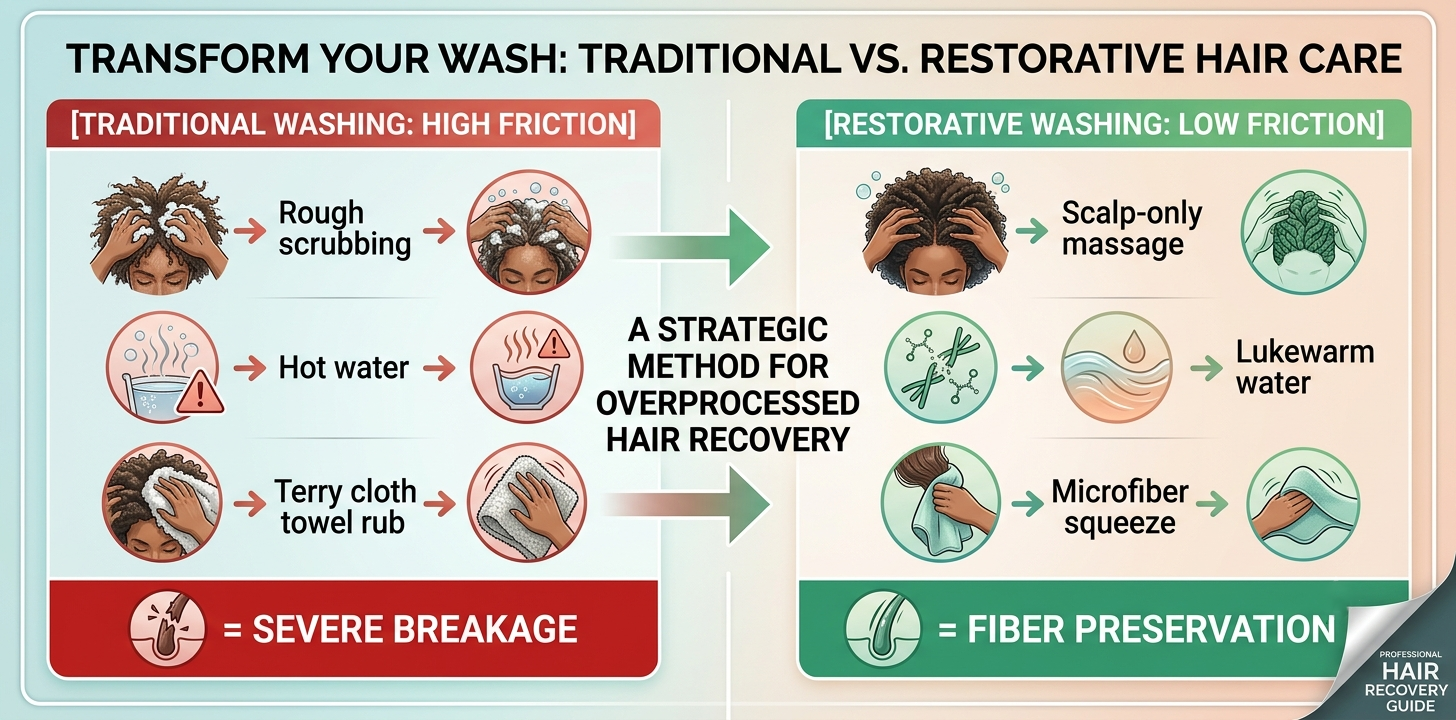
Overprocessed hair is at its most vulnerable when wet. Change your washing mechanics to avoid unnecessary mechanical breakage:
- Shampoo: Switch to a sulfate-free, pH-balanced, non-stripping shampoo. Focus application strictly on the scalp, letting the suds rinse gently through the ends.
- Water Temperature: Wash with lukewarm water and rinse with cool water to encourage the lifted cuticle scales to lay flat.
- Drying: Stop rubbing your hair with heavy cotton bath towels. Instead, gently squeeze excess water out using a microfiber towel or a soft cotton t-shirt.
Step 4: Seal the Cuticle with Low-pH Leave-Ins and Oils
Because an overprocessed cuticle cannot seal itself, your hair loses moisture almost as fast as it absorbs it. You must mimic a healthy cuticle using topical sealants.
- Apply a lightweight, water-based leave-in conditioner to damp hair to lock in hydration.
- Follow up with a lightweight hair oil (like jojoba, argan, or sweet almond oil) to smooth the surface, seal the moisture in, and provide a protective barrier against environmental aggressors.
Step 5: Get a Strategic Trim
While targeted products can patch-repair mid-shaft damage, they cannot fuse split ends back together permanently. If your ends look like frayed feathers or feel like Velcro, a strategic haircut is necessary. Asking your stylist for a “dusting” (removing just the damaged tips) or a clean, blunt cut will halt splits from traveling up the hair shaft and destroying healthy hair.
| Further Reading: |
How to Restore Damaged Hair Naturally
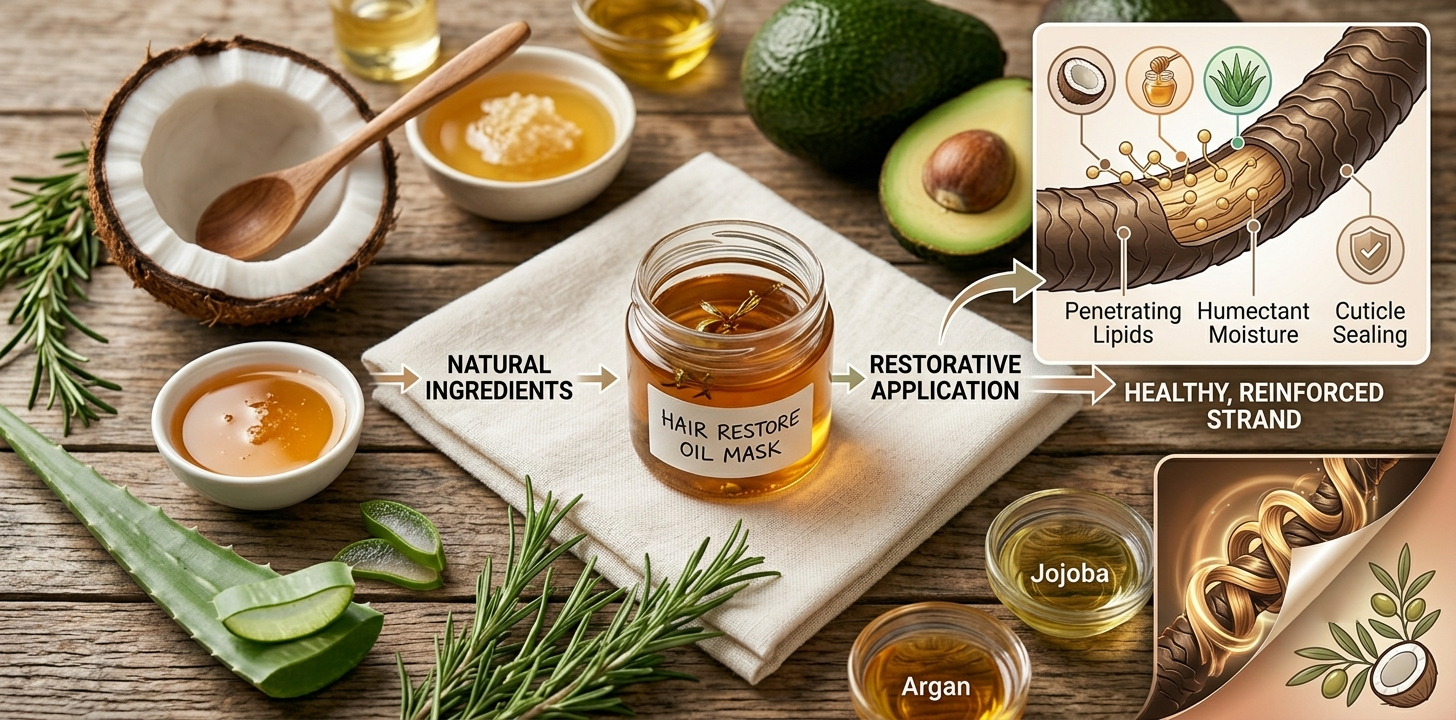
If you want to augment your salon-grade routine with clean, at-home methods, you can restore damaged hair naturally by focusing on plant-derived lipids and scalp wellness.
- Warm Coconut Oil Pre-Poo: Pure extra virgin coconut oil is one of the few natural oils proven to penetrate the hair shaft and reduce protein loss during washing. Apply warm coconut oil to your mid-lengths and ends 30 minutes before stepping into the shower to shield your hair from hygral fatigue (the weakening of the hair fiber caused by repeated swelling and drying).
- Aloe Vera and Honey Hydrator: Mix pure aloe vera gel (a natural humectant) with a tablespoon of raw honey. Apply it to clean, damp hair for 20 minutes. This creates a natural moisture wrap that draws hydration deep into parched fibers.
- Scalp Stimulation: While you cannot change the hair that is already damaged, you can optimize the hair that is currently growing. Massage your scalp weekly with rosemary or peppermint oil diluted in a carrier oil to boost blood circulation and encourage strong, resilient new growth.
4 Common Mistakes to Avoid During Hair Recovery
When attempting how to repair chemically damaged hair, what you stop doing is just as important as what you start doing. Avoid these common recovery pitfalls:
- Over-relying on Protein: Using intensive protein treatments every day will cause “protein overload,” making your hair feel like stiff straw and accelerating breakage. Always follow protein with a rich moisture sealant.
- Using Heavy Silicones to Mask Damage: Cheap, non-soluble silicones make hair look shiny temporarily, but they create an impermeable barrier that blocks moisture from penetrating. Opt for water-soluble silicones (like dimethicone copolyol) or natural oils instead.
- Brushing Carelessly from the Roots Down: Ripping a brush from your roots down through tangled, brittle ends acts like a guillotine for overprocessed hair. Always use a wide-tooth comb or a dedicated detangling brush, starting at the very tips and working your way up gradually.
- Tying Hair with Tight Elastics: Traditional elastic hair bands create intense friction on the exact same spot of the hair shaft. Switch to silk or satin scrunchies, and avoid tight, high-tension hairstyles like sleek buns or tight braids while your hair recovers.
| Further Reading: |
Frequently Asked Questions (FAQs)
What are the signs of overprocessed hair?
The most glaring signs include a gummy, spongy, or limp texture when wet, and extreme brittleness, frizz, and lack of shine when dry. You will also notice a high rate of breakage (short pieces of hair falling out rather than full strands with the root bulb attached) and severe tangling every time you wash your hair.
Can overprocessed hair be repaired completely?
Technically, no. Hair is dead tissue; it does not have living cells to regenerate or heal itself like skin does. However, you can use bond-builders and protein treatments to structurally reinforce the hair, patch up the damaged cuticle, and prevent future breakage until healthy new hair grows in to replace it.
What treatments work best for chemically damaged hair?
The most effective options are salon-strength bond-builders, professional-grade hydrolyzed protein treatments, and intensive ceramide-rich moisture masks. Look for ingredients like keratin, silk amino acids, argan oil, and panthenol to repair, strengthen, and soften the hair fiber.
How long does it take for overprocessed hair to recover?
You will notice an improvement in manageability, softness, and shine within two to three weeks of starting a consistent bond-building and moisture routine. However, a complete structural recovery requires patience. Because hair grows at an average rate of half an inch per month, it can take anywhere from six months to a year or more to completely grow out and trim away deeply damaged sections.
Should I use protein or moisture treatments for damaged hair?
You need both, but the key lies in balance. Chemically damaged hair loses its structural protein framework, meaning it requires targeted protein treatments to rebuild internal strength. However, without adequate moisture, protein makes the hair stiff and brittle. The gold standard is to use a protein or bond treatment, followed immediately by an intensive hydrating mask.
The Path Forward: Patience and Consistency
Waking up to overprocessed hair can feel disheartening, but remember that hair health is a journey. By understanding the science of your hair, halting aggressive chemical processes, and utilizing a thoughtful combination of bond repair, protein, and moisture, you can successfully revive your strands.
Be gentle with your hair, invest in high-quality restorative products, and give your scalp the time it needs to generate fresh, healthy growth. Your hair will reward your patience with renewed strength, bounce, and shine.
| Ready to rescue your hair? Start your recovery journey today by swapping out your standard conditioner for an intensive, bond-rebuilding mask, and give your hot tools a well-deserved vacation. Your hair will thank you! |