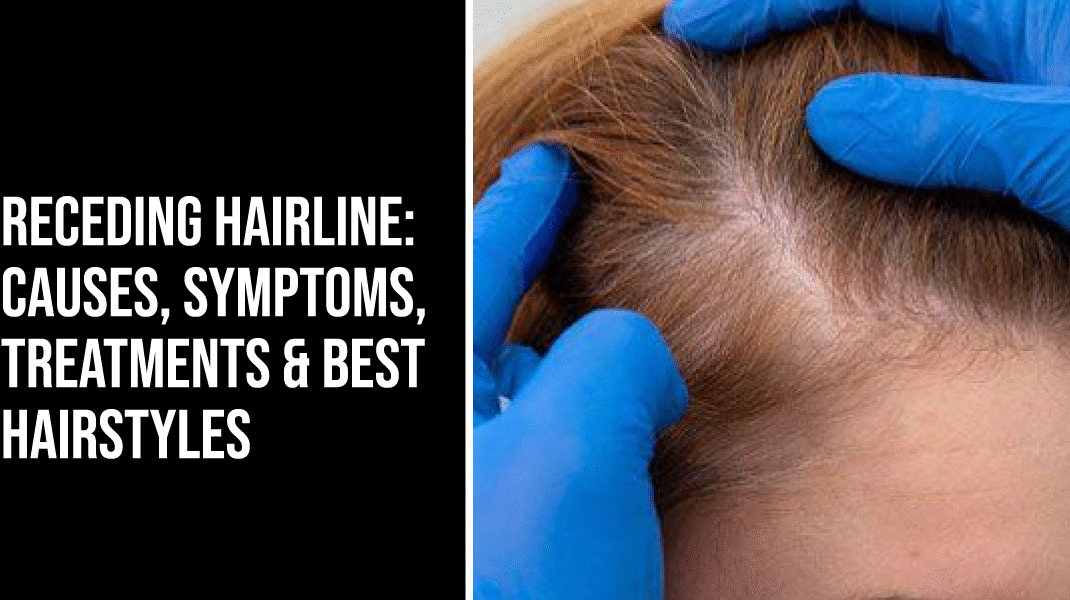
A receding hairline happens when the hair at the front and temples slowly moves backward. The forehead may start to look bigger, and the hairline may form shapes like M, V, U, or Widow’s Peak.
Most people think this only happens to men, but women can also get a receding hairline, especially near the temples or part line.
The important thing to know is:
- A receding hairline is very common
- Many people see changes in their 20s–50s
- Women mostly see thinning, not full bald spots
- Early treatment usually works better
- Hair loss can be slowed, managed, and sometimes regrown
So, don’t panic. Understanding the cause helps you choose the right treatment.
What is a Receding Hairline?
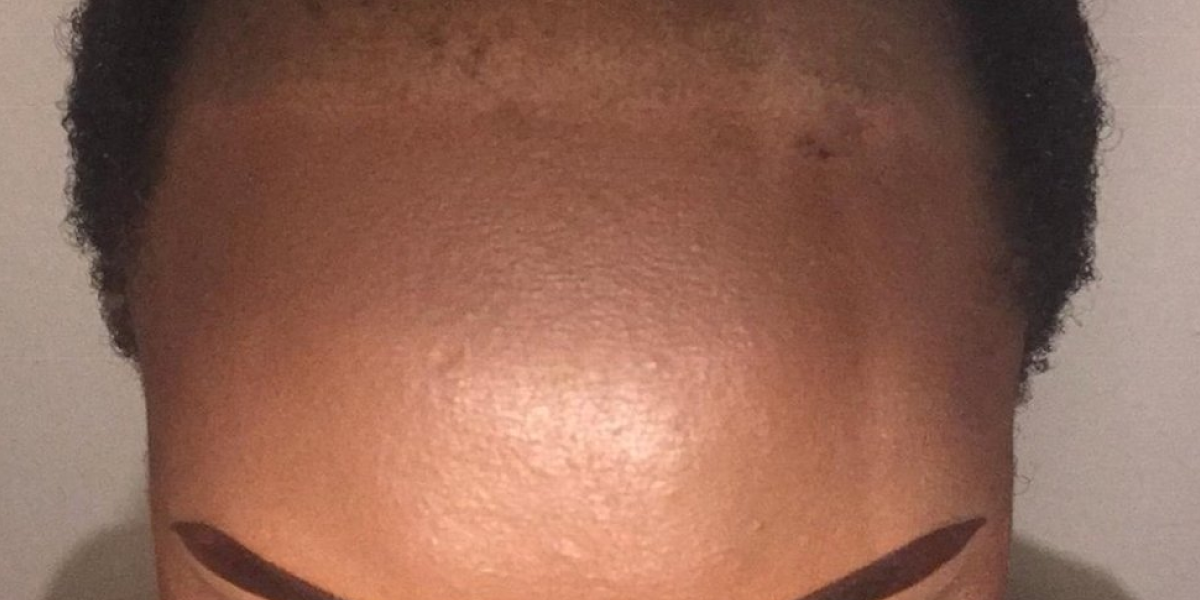
A receding hairline happens when hair follicles shrink, weaken, or get damaged. Because of this, hair becomes:
- Thinner
- Shorter
- Weaker
…and eventually stops growing in certain areas, especially at the temples and forehead.
In men with receding hairlines, the hairline typically pulls back into an M-shape. On the other hand, in a receding hairline in women, the hairline may stay straight at first, but the hair becomes thinner along the part line or temples.
This process can be:
- Slow
- Gradual
- Progressive over the years
- Or sometimes temporary, depending on the cause
So if you are asking yourself, “Why is my hairline receding?” – the answer usually lies in genetics, hormones, lifestyle, medical conditions, or aging.
Mature Hairline vs Receding Hairline – What’s the Difference?
A lot of people confuse a mature hairline with a receding hairline. They are not always the same.
| Mature Hairline (This is a normal aging process, not baldness) | A mature hairline:
|
| Receding Hairline | A true receding hairline:
|
So, if you see hair thinning at the hairline in males, it may be the early stage of a receding hairline.
Symptoms of a Receding Hairline
Common signs include:
- Hair thinning around the temples
- Forehead looking larger
- More shedding while showering or brushing
- Hairline forming M, V, U, or Widow’s Peak
- Scalp looking more visible
- In women, thinning near the part line or temples
- Possible itching or scalp sensitivity (not always)
Symptoms usually develop slowly over months or years, so early attention really helps.
What Causes a Receding Hairline?
There are several possible reasons behind the receding hairline. Here they are:
Genetics (Most Common Cause)

This is the main reason behind a receding hairline in both men and women.
If baldness runs in your family, you may inherit sensitivity to a hormone called DHT. This hormone slowly makes the hair follicles shrink and weaken. When that happens, you start to notice:
- Shorter hair growth cycles
- Thinner and softer hair
- Hair that eventually stops growing
This condition is called:
- Male pattern baldness
- Female pattern hair loss
It usually happens slowly over many years. The hairline starts to move back, especially near the temples. It is progressive, which means it keeps going unless treated. But the good news is there are many treatments today that can slow it down, protect the hair, or even help regrowth in some people.
Hormone Changes
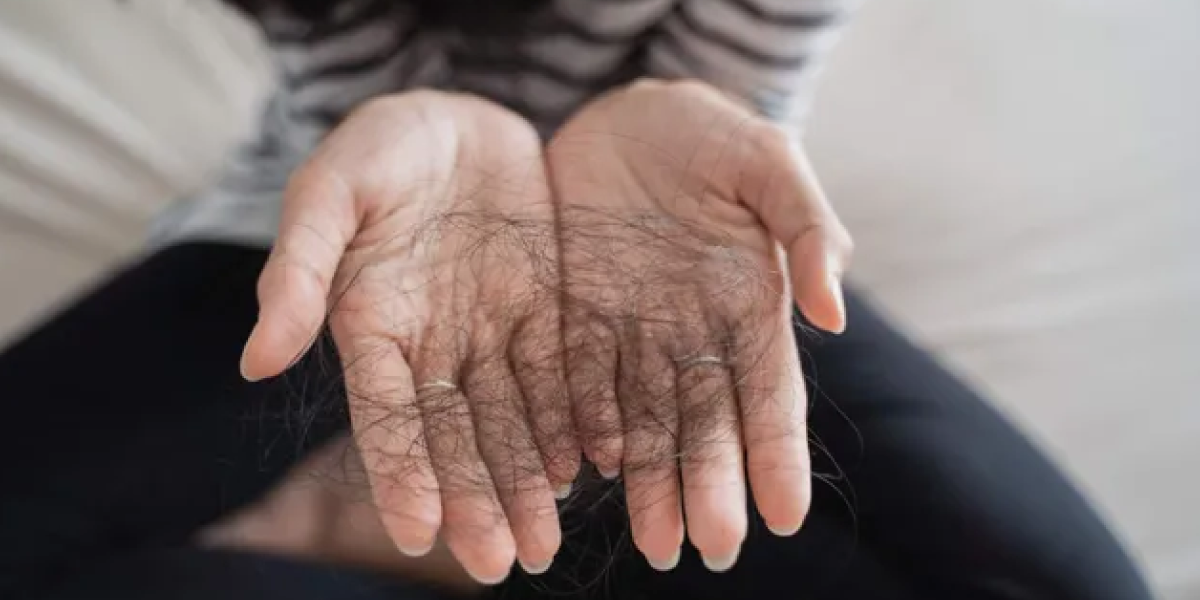
Hormone changes can also speed up hair loss or thinning. This can happen due to:
- Aging
- Menopause
- PCOS
- Hormone therapy
- Testosterone use
When hormones change, the hair becomes more sensitive and may weaken near the hairline. This is especially common in women, where thinning around the temples or part line becomes more visible.
Aging

As we grow older, hair naturally changes. It:
- Grows slower
- Becomes weaker
- Loses thickness
So aging alone can cause a receding hairline. And when aging mixes with genetics, the hairline may move back even faster. This is a very natural process, so you are not alone.
Traction Alopecia (Tight Hairstyles)
This happens when hair is pulled too tightly for a long time. Styles that may cause this include:
- Tight ponytails
- Tight buns
- Extensions
- Braids
- Cornrows
The constant pulling puts stress on the hair roots, especially around the front hairline. If this goes on for years, the hair follicles can become damaged and stop growing hair.
The good news? If you catch it early and loosen your hairstyle, your hair often grows back. But if the pulling continues for too long, the damage may become permanent.
Stress or Illness – Telogen Effluvium
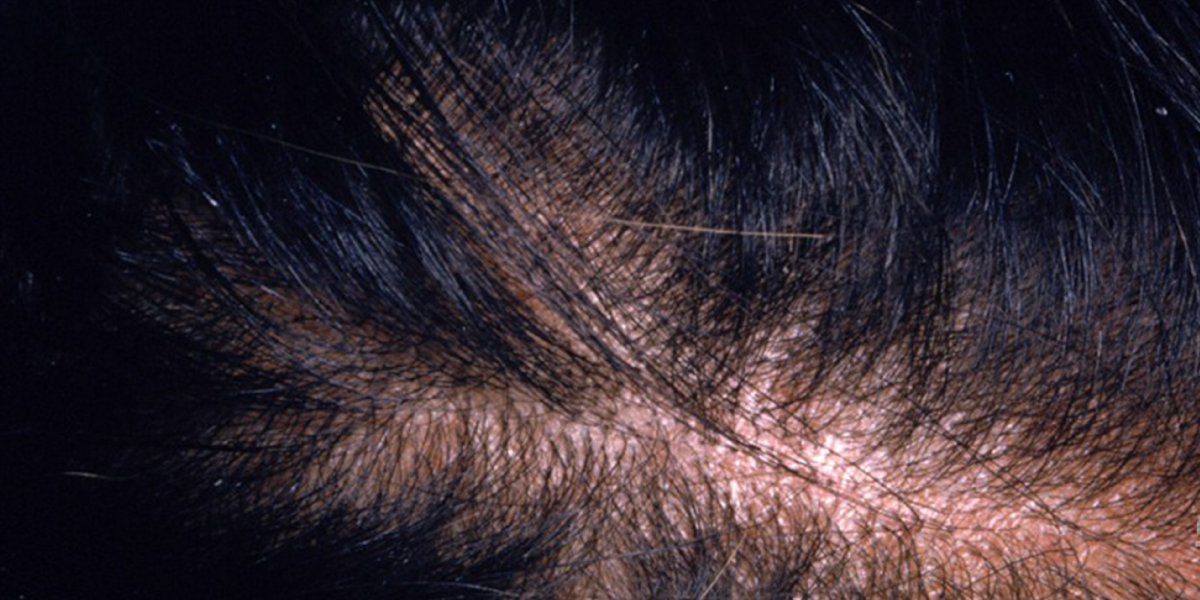
Strong stress or illness can shock the hair and push it into a shedding phase. This can happen after:
- Emotional stress
- High anxiety
- Illness
- Surgery
- Crash dieting
- Rapid weight loss
- GLP-1 medications
You may notice extra hair fall for a few months. This condition is usually temporary. But if your hairline was already weak, it may look even thinner during this time.
Nutritional Deficiencies

Your hair needs enough nutrients to stay strong. Lack of key nutrients can lead to thinning, such as:
- Iron
- Vitamin D
- Protein
- Zinc
Women with heavy periods are more at risk of iron deficiency, which can cause noticeable hair thinning. Once the deficiency is treated, hair often improves.
Also, if interested, you can check out this guide to learn about the best shampoo and conditioner for thinning hair.
Autoimmune Conditions – Such as Frontal Fibrosing Alopecia (FFA)
Sometimes the immune system mistakenly attacks the hair follicles. One example is Frontal Fibrosing Alopecia. This mostly affects post-menopausal women and may cause permanent hair loss along the front hairline or eyebrows.
This type needs fast medical treatment to slow it down. The sooner it is checked by a dermatologist, the better.
Diagnosis – How Doctors Check That You May Have a Receding Hairline
A dermatologist may:
- Examine your scalp
- Ask about family history
- Perform a pull test
- Order blood tests
- Rarely do scalp biopsies
Early diagnosis = better treatment results.
Treatment Options for a Receding Hairline
Treatment depends on stage, cause, and health condition.
FDA-Approved Treatments
Finasteride (Propecia) and minoxidil (Rogaine) are both medicines approved by the FDA in the United States to treat hair loss.
Minoxidil (Rogaine)
A foam or liquid is applied to the scalp.
Benefits:
- Improves blood flow
- Stimulates follicles
- Works for both men & women
- Available without a prescription
Must be used consistently.
Finasteride (Men Only)
A daily pill that:
- Blocks DHT
- Slows hair loss
- Encourages regrowth
Always consult a doctor, as it may have side effects.
Spironolactone (Women)
Helps block androgen hormones linked to female hair loss.
PRF / PRP Injections
Uses your own platelets to stimulate follicle repair.
Laser Therapy (LLLT)
Low-level laser caps improve cell energy & hair strength.
Hair Transplant Surgery
Two main types:
- FUE — Follicular Unit Extraction
- FUT — Strip Method
But remember, don’t take any medications without your doctor’s recommendation.
Natural & Lifestyle Support for Healthy Hair (Helpful but Not Cures)
Let’s show you habits that can support healthier hair growth. Also, here’s a guide to learn about the best shampoo and conditioner for hair growth.
4-minute Daily Scalp Massage
Gently massaging your scalp for about four minutes a day helps increase blood flow to the hair roots. Better blood flow means more oxygen and nutrients reach the follicles, which can help the hair stay healthier and stronger. You do not need to press hard. Just use your fingertips and move them in small circles. Do it when relaxing or before sleep. It is not a cure, but it can support healthier hair over time.
Protein-rich Diet
Your hair is made mostly of protein. So if you do not eat enough protein, your hair can become weak, thin, and fall out more easily. Try to eat foods like eggs, chicken, fish, beans, lentils, yogurt, tofu, or dairy. Even small daily portions help.
Iron-rich Leafy Greens
Leafy greens like spinach, kale, and broccoli are rich in iron. Iron helps carry oxygen in your blood, which your hair roots need to grow properly. Low iron can make hair shed more and look thinner, especially in women. Adding leafy greens to meals a few times a week can support healthier hair growth in a simple, natural way.
Nuts and Seeds for Zinc
Nuts and seeds such as almonds, cashews, peanuts, pumpkin seeds, and sunflower seeds contain zinc. Zinc helps your scalp stay healthy and supports hair repair and growth. When your body lacks zinc, hair may fall out more than normal. Having a small handful of nuts or seeds daily is an easy snack that also feeds your hair.
Stress Control
High stress can push hair into a shedding phase, which makes your hairline and scalp look thinner. Stress also affects your hormones and sleep, which can make hair loss worse. Try simple ways to calm your mind, like walking, deep breathing, prayer, meditation, hobbies, or talking to someone you trust.
Avoid Smoking
Smoking reduces blood flow and oxygen to your hair roots. Over time, this can weaken the follicles and speed up hair thinning and receding. It also affects hormones and damages the scalp. Quitting smoking is one of the best things you can do, not just for your hair, but also for your lungs, heart, and skin.
Gentle Hair Care and the Right Products Matter
You can also support your hair with gentle hair care products. Try to use shampoos and oils that are mild, sulfate-free, and kind to the scalp. Avoid harsh chemicals or strong styling products that damage hair roots.
If your hair feels dry or weak, nourishing oils and serums can help keep it soft and protected. At Salon Essentials LA, we always suggest choosing products that care for both the scalp and the hair so your hair stays healthier in the long run.
| For orders, please call us now at 5042144089 — we are happy to help. |
Best Hairstyles for a Receding Hairline
Choosing the right receding hairline hairstyles can make a big difference.
Top Picks for Men’s Receding Hairline Hairstyles
Buzz Haircut Receding Hairline
- Short, clean, confident look
- Makes thinning less obvious
Textured / French Crop
- Fringe covers temples
Crew Cut
- Focuses attention upward
Caesar Cut
- Short, straight fringe in front
Taper Fade
- Blends thin and thick areas
Modern Side Part
- Adds structure & volume
These are great hairstyles for a receding hairline because they work with the hair, not against it.
Styles to Avoid
- Slick-back hair
- Tight ponytails/braids
- Heavy comb-overs
These can further highlight thinning or damage to follicles.
Receding Hairline in Women
Women may experience a receding hairline due to:
- Menopause
- FFA
- Hormonal imbalance
- PCOS
- Stress
- Tight hairstyles
- Nutritional deficiencies
- Medication
Women respond well to:
- Minoxidil
- Spironolactone
- PRP
- Medical evaluation
- Transplants (case-by-case)
The earlier treatment starts, as recommended by the doctor, the better the outcome.
Expert Recommendations
Dermatologists suggest:
- Start treatment early
- Expect results in 3–6 months
- Combine therapies where needed
- Test iron, vitamin D, & thyroid levels
- Avoid tight hairstyles
- Protect the scalp from the sun
- Do not self-medicate with hormones or finasteride
When Should You See a Doctor?
You should see a doctor if your hair starts falling out very fast, if you notice patchy bald spots, or if your scalp feels painful, red, itchy, or sore. Get help quickly if you see scarring on the scalp or if the skin looks shiny or damaged.
It is also important to see a doctor if the hair loss starts after you begin a new medication, or if you are a woman and you notice hair loss along with acne or extra facial hair growth, because this may be linked to hormones.
Early advice can stop things from getting worse and help you find the real cause.
Wrapping Up
So to sum it up, a receding hairline is very common and nothing to feel ashamed of. Most of the time, it happens because of genetics and hormones, but stress, illness, certain hairstyles, and autoimmune conditions can also cause it. The good news is that treatments can slow down hair loss or even help restore some hair, the right hairstyle can make it less noticeable, and a dermatologist can guide you safely. The earlier you start taking care of it, the better the results.
Remember, this guide is for learning only and not a medical diagnosis, so always talk to a healthcare professional before starting any treatment.
FAQs
|